Is Your Body Stuck in Fight-or-Flight?
You don’t have to be panicking to be stuck in survival mode. Most people who live in chronic activation just feel relentlessly on, tired but wired, never fully at ease.
By Dr. Christine Lebiecki, D.C. · June 15, 2026

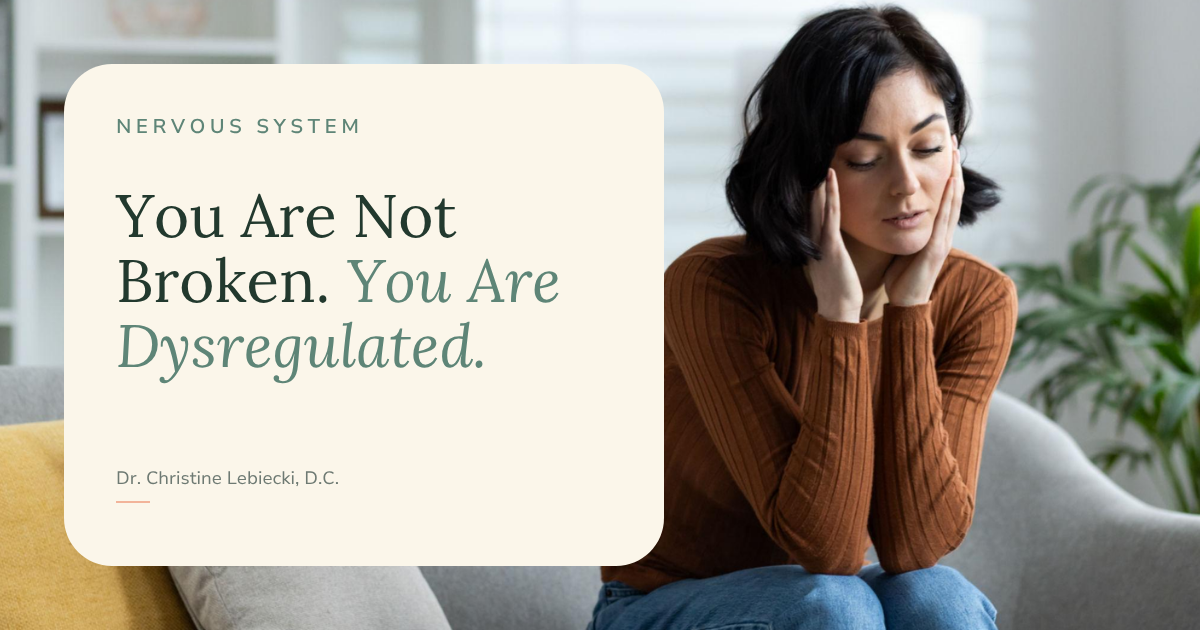
You do not have to be panicking to be stuck in fight-or-flight. Most people who live in chronic sympathetic activation do not feel dramatic distress. They just feel relentlessly on. Always slightly tense. Never fully able to relax. Tired but wired. Managing everything and restoring nothing.
What Fight-or-Flight Is Supposed to Do
When your nervous system detects a threat, the sympathetic branch activates: heart rate increases, blood pressure rises, digestion slows, muscles tense, cortisol and adrenaline flood the system. Once the threat passes, the parasympathetic system takes over: slowing the heart rate, relaxing muscles, resuming digestion, and allowing the body to repair and restore. This cycle of activation and recovery is healthy and normal. The problem is that for many people, the recovery phase never comes. The stressors are constant. The nervous system stays activated. Sympathetic dominance becomes the default.
Signs Your Nervous System Is Stuck
You wake up tired even after a full night of sleep. Your shoulders and jaw are always tense. Small things feel disproportionately difficult. Your digestion is unpredictable. You feel on edge for reasons you cannot name. You either overreact or feel emotionally numb. You cannot remember what it feels like to be genuinely relaxed. These are not personality traits. They are physiological signs of a nervous system in overdrive.
How the Spine Is Involved
The spinal cord runs through the vertebral column, and the nerves that regulate every function of the body branch from it. When vertebrae are misaligned or surrounding tissue is under chronic stress, the nervous system’s ability to transition from sympathetic to parasympathetic mode is impaired. This is why chiropractic care, done well and with a nervous system focus, can produce significant changes in how a person feels overall. Adjustments do not simply reduce back pain. They restore the mechanical conditions that allow the nervous system to regulate.
What Regulation Feels Like
Many patients who have been in sympathetic overdrive for years do not initially know what regulation feels like. The first signs are subtle: shoulders that drop without forcing them, breath that comes more easily, a sense of taking up space in the body again rather than bracing against it. Over time: deeper sleep, clearer thinking, improved digestion, and a significantly reduced sense of constant threat. This is what Dr. Christine works toward with every patient, not just symptom relief, but genuine regulation.
You are not meant to live braced. Your body knows how to come back to ease when it is finally given the chance.
Ready to shift out of survival mode? Call Family First Chiropractic.
Or call (802) 860-0382