
First Steps After a Car Crash in Colchester, VT
The first 72 hours after a crash shape your recovery more than almost anything that happens later.
By Dr. Christine Lebiecki, D.C. · November 15, 2020
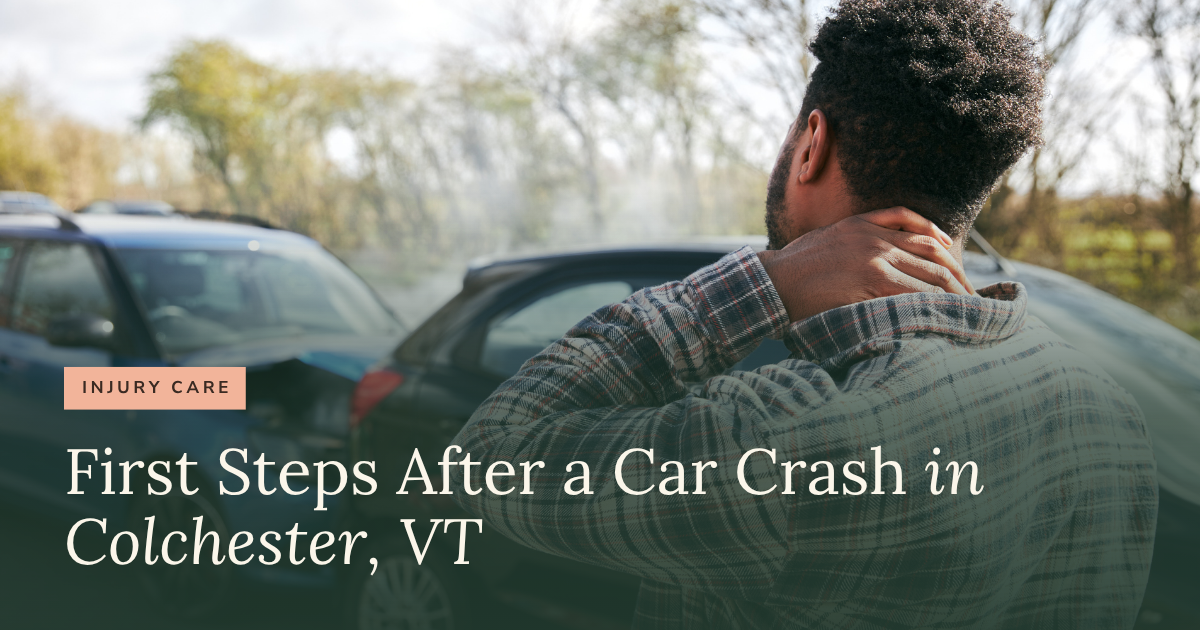
You are standing on the shoulder of Roosevelt Highway with your hazards on, your hands are shaking, and someone is asking if you are okay. You say yes. You probably mean it. Here is what I want you to know: in that moment, you are the least reliable narrator of your own body that you will be all year.
That is not a criticism. It is physiology. And it is why the decisions you make in the next three days matter so much.
Before You Leave the Scene
Your memory of a crash starts degrading almost immediately. Stress does that. So document while the evidence is still in front of you.
Photograph all four corners of both vehicles, the license plates, the position of the cars before anything is moved, the road surface, the skid marks, and the intersection or road sign that places it. Get the other driver's name, insurance carrier, policy number, and plate. If anyone stopped to help, ask for a phone number, because independent witnesses matter later and they disappear fast.
Then write down, in your own words, what happened and what you felt in your body. One paragraph in your phone's notes app. Date it. That note becomes the earliest record of your symptoms, and the earliest record is often the most useful one.
Why "I Feel Fine" Is Not the Same as Being Fine
At impact your nervous system floods you with adrenaline and cortisol. That surge exists to get you out of danger, and one of the things it does best is turn down pain signaling. You can have real soft tissue injury and genuinely feel very little for hours.
When that surge clears, usually somewhere between twelve and seventy-two hours later, the picture changes. Stiffness sets in. Turning your head to back out of a parking space suddenly hurts. Headaches start at the base of the skull. That delay is normal and expected, and it is the single most common reason people skip evaluation and regret it. I go deeper into that timeline in why whiplash symptoms surface days later.
Emergency Room, Urgent Care, or Chiropractic
These are three different tools. Use them in the right order.
Go to the emergency room, or call 911, if you have any of the following: loss of consciousness at any point, confusion or memory gaps, a headache that is worsening, repeated vomiting, numbness, tingling or weakness in an arm or leg, loss of bowel or bladder control, severe midline neck or back pain, trouble breathing, or abdominal pain and bruising from a seatbelt. Those are red flags for fracture, bleeding, or neurological injury and they need imaging and a physician now. Chiropractic is not the right first stop for any of them.
Urgent care is reasonable for moderate pain with no red flags, especially after hours, and for a cut or a suspected simple fracture.
A chiropractic evaluation makes sense once serious injury has been ruled out, or when there were no red flags to begin with and you are dealing with neck, mid back, low back, or shoulder pain, stiffness, or headaches. What that visit consists of is covered in chiropractic care after a car accident.
Adrenaline is not a second opinion. Get evaluated on the evidence of what happened to your body, not on how it happens to feel ninety minutes later.
Reporting the Crash in Vermont
Vermont expects a written crash report filed with the DMV within 72 hours when a crash causes injury, death, or property damage above the state threshold, which has changed over the years, so confirm the current figure with the DMV or your agent. Police at the scene do not remove that obligation from you.
Notify your own insurer promptly even if the crash was clearly the other driver's fault. Give facts only. Do not guess at fault, do not estimate your injuries, and do not accept a recorded statement about your physical condition in the first few days, because you do not yet know what your condition is.
What the Next Three Days Should Look Like
Move gently and often rather than resting flat. Keep the note you started at the scene and add to it each morning: what hurts, how much, what it stopped you from doing. Sleep is where soft tissue repair happens, so protect it. And get evaluated inside that window even if the pain is mild.
At Family First Chiropractic in Colchester, Vermont, I keep room for post crash evaluations, because timing genuinely matters here. If you were in a crash this week in Colchester or anywhere in Chittenden County, call and tell the front desk it was an auto injury. We will get you looked at, tell you honestly whether chiropractic is the right care for what you have, and refer you out if it is not.
At Family First Chiropractic our team is here to help. Contact us today.
Or call (802) 860-0382